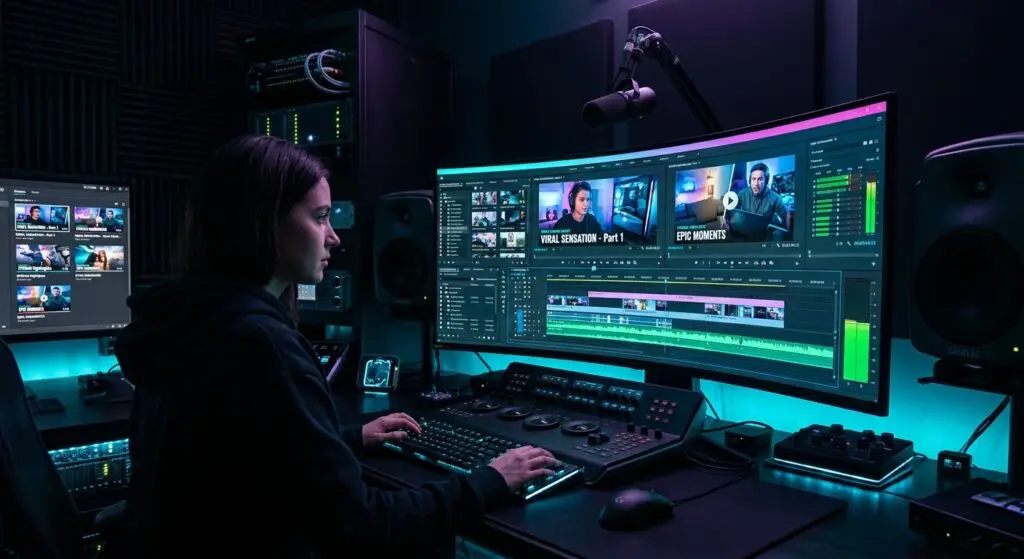
Taking long live streams, movies, or podcasts and chopping them down into short, highly shareable YouTube videos has become a major content engine. Known as clipping, this practice powers millions of views every single day.
Whether you want to build a side hustle or learn how the modern digital media ecosystem works, here is a complete breakdown of how clipping operates, how creators navigate copyright, what you can actually earn, and how long it takes to grow.
What is Clipping? (Types and Examples)
Clipping involves extracting memorable moments from long form video content and republishing them as YouTube Shorts or structured long form compilations.
1. Livestream and Creator Clipping
This is the most common and highest performing category. Clippers monitor popular streamers on Twitch, Kick, or YouTube, capturing funny moments, unexpected fails, or passionate debates.
- Example: Channels like Daily Dose of Twitch or dedicated creator highlight hubs cut down multi-hour broadcasts from streamers like xQc or Kai Cenat into punchy 30-second Shorts or 10-minute weekly highlight reels.
- Why it works: Top streamers often encourage fan clippers because it acts as free marketing. Some creators even offer cash bounties to the best clippers.
2. Movie and TV Show Highlights
Clippers select iconic cinematic scenes, dramatic character reveals, or anime battle sequences.
- Example: Channels like SceneSelect upload standalone movie clips with clean titling, such as iconic action sequences or famous monologue scenes.
3. Transformative Edits and Commentary
Instead of posting raw footage, these clippers add heavy visual or narrative modifications.
- Example: Reaction channels, movie analysis hubs, or meme compilation creators who overlay commentary, kinetic typography, or visual tracking onto existing clips.
How Clippers Deal with Copyright
Copyright detection is the main hurdle every clipper faces. YouTube utilizes an automated system called Content ID to match uploaded video and audio against a massive database of copyrighted media.
Clippers use four primary methods to handle these rules:
1. Official Permission and Creator Coalitions
Many top internet personalities explicitly give public permission for fans to clip their content, provided the channels follow basic community guidelines. In these cases, clippers do not have to worry about takedowns from the original creator.
2. Transformative Fair Use Editing
Simply re-uploading unedited clips triggers YouTube’s Reused Content policy, which prevents monetization. To qualify as transformative content, clippers add significant original value:
- Adding live commentary, facecam reactions, or voiceovers.
- Inserting dynamic captions, motion graphics, and sound effects.
- Cutting away every few seconds to prevent uninterrupted continuous playback.
3. Modifying Audio and Video Signals
Movie and TV clippers often adjust technical properties to bypass automated scanners:
- Visual adjustments: Flipping the frame horizontally, applying color filters, placing custom background borders, or subtly zooming in.
- Audio adjustments: Shifting audio pitch slightly up or down, adding background ambience, or altering speed by small percentages. (Note: While this can pass automated filters, manual claims from film studios will still result in video blocks or account strikes.)
4. Accepting Revenue Claims
When Content ID flags a movie or TV scene, the studio usually issues a Copyright Claim rather than a full strike. The video remains live, but all ad revenue goes straight to the copyright holder. Clippers operating in this category rely on affiliate links or brand deals instead of ad payouts.
Earnings Potential: What Can You Make?
Earnings depend heavily on whether you rely on direct ad payouts or external monetization strategies.
Option A: YouTube AdSense Direct
- Unedited / Reused Clips: $0. YouTube strictly denies monetization for simple reposts under its Reused Content policy.
- Transformed Stream Shorts: Around $0.03 to $0.06 per 1,000 views on Shorts ($30 to $60 for every 1 million views).
- Transformed Long Form Compilations: Between $1.00 and $3.00 RPM ($1,000 to $3,000 per 1 million views), provided the content includes original commentary or editing.
Option B: Alternative Revenue Streams
Because AdSense can be unpredictable for clipping channels, successful operators use direct monetization methods:
- Streamer Bounties: Direct payouts from creators based on view performance (for example, $10 to $20 per 100,000 views).
- Affiliate Links: Adding gear, gaming, or software links in descriptions and pinned comments.
- Direct Sponsorships: Pitching mobile games, digital services, or merch brands once a channel gets steady view volume.
Realistic Monthly Revenue Expectations:
- Months 1 to 3: $0 per month (Building initial footprint)
- Months 3 to 6: $300 to $1,200 per month (Reaching steady viewership with affiliate and bounty income)
- Established Multi-Channel Networks: $3,000 to $10,000+ per month
How Long Does It Take? (The Growth Timeline)
- Phase 1: Testing (Weeks 1 to 4) Post two to three Shorts daily using tools like CapCut or Premiere. Test different creators or niches to find what the algorithm promotes.
- Phase 2: Initial Traction (Months 2 to 3) The algorithm begins recognizing your core audience. Reaching your first 1,000 subscribers and hitting viral clips (100,000+ views) usually happens during this window.
- Phase 3: Monetization Push (Months 4 to 6) Targeting the thresholds required for channel partnership (10 million Shorts views or 4,000 long form watch hours) while fine-tuning edits to pass reused content reviews.
- Phase 4: Scaling (Months 6 to 12) Automating your editing workflow, expanding across multiple niches, and securing direct brand sponsorship deals.