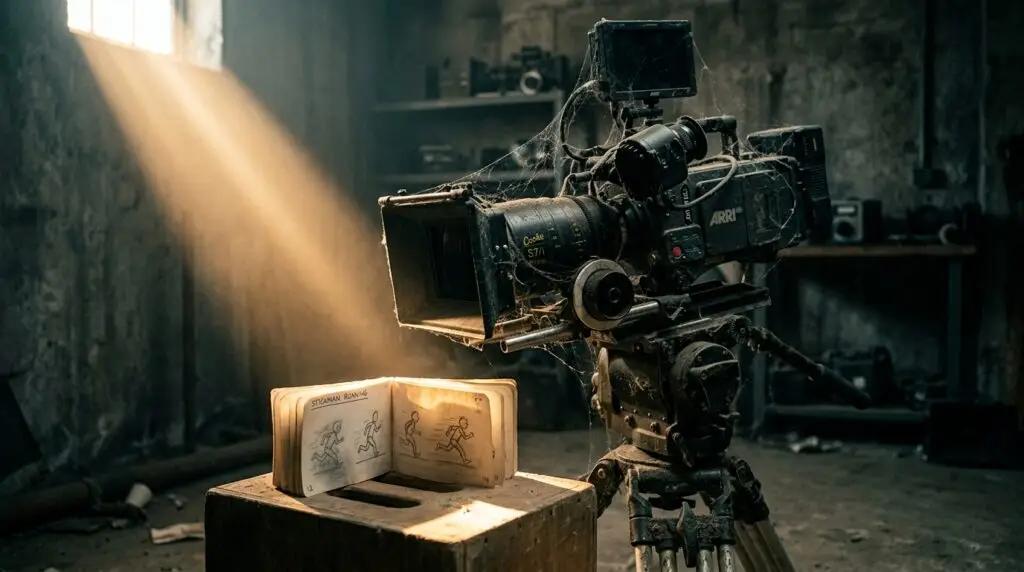
You have fourteen browser tabs open right now. Half of them are RED or ARRI spec sheets; the other half are YouTube reviews analyzing dynamic range, low-light performance, and lens flare characteristics.
You’ve convinced yourself that if you just save another $3,000, or buy that anamorphic glass, that 8K sensor, or that dual-native ISO body, your films will finally look like the movies in your head.
Here is the brutal truth: A $10,000 camera doesn’t make a bad scene look better. It just renders its flaws in higher definition.
The Resolution Delusion
Audiences do not leave the cinema humming the dynamic range. They don’t talk about sensor read-out speed over drinks. They don’t buy a ticket because a shot was rendered in native 8K.
They care about one thing: Intent.
A compelling, heart-wrenching, or terrifying story shot on an iPhone 11 will hold a viewer’s attention every single time over a dull, aimless scene shot on a $50,000 Venice 2 setup. When you shoot a poorly lit room with amateur actors and bad pacing on a cinema camera, you don’t get magic: you get high-resolution footage of a boring room.
High-end gear doesn’t cover up mistakes. It exposes them.
If your key light is flat, cinema sensors will show every drop of flat lighting with clinical precision. If your actor feels unnatural, crystal-clear glass makes every forced facial twitch impossible to ignore.
The 3 Things That Actually Hold the Frame
If you want your footage to scream “cinema,” stop looking at camera bodies and start mastering the three elements that actually shape the image:
- Light & Shadow: Cinema isn’t about throwing light at a subject; it’s about controlling where light doesn’t go. A single $50 hardware store bulb placed with artistic intent creates more mood than ten expensive panels blasting a room blind.
- Performance & Pacing: A great director gets a raw, authentic human reaction out of an actor. If the emotional beat lands, the audience won’t notice if the frame is slightly noisy.
- Audio & Sound Design: Bad lighting looks like an artistic choice; bad audio looks like a mistake. Audiences forgive an underexposed frame instantly, but they tune out the second dialogue gets clipped or echoes.
Build the Story First. Upgrade Later.
The gear trap is comfortable. Researching tech specs feels like work, but it’s actually procrastination disguised as production prep. It shields you from the terrifying, messy reality of making something and running the risk that it falls short.
Stop waiting for the perfect rig. Take whatever device is in your pocket, light the scene with purpose, guide your actors, and tell the story. When you can make an audience feel an emotion on a smartphone, you’ll finally be ready for the $10,000 camera.