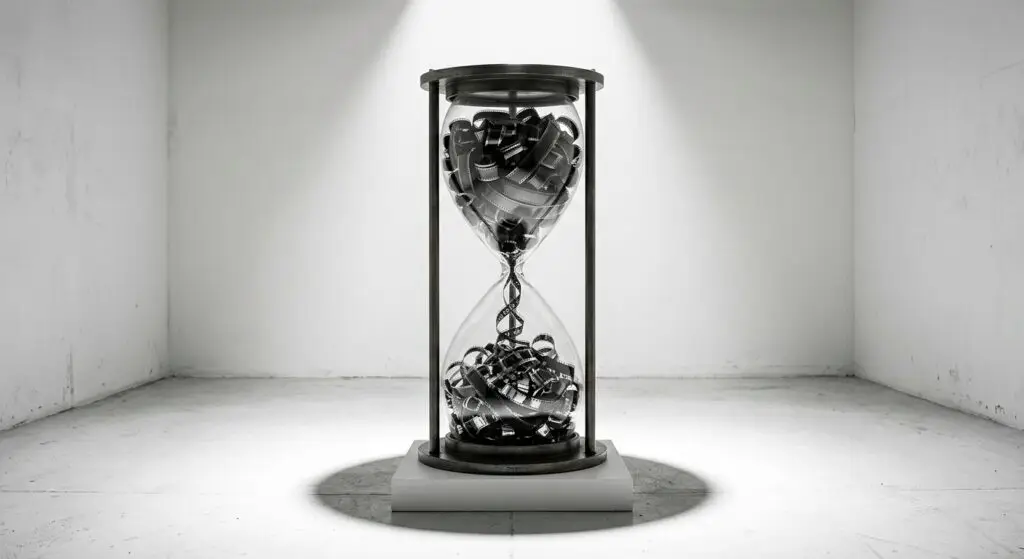
There is a quiet tragedy that repeats in the lives of people who want to make films but do not. It is not dramatic. It does not announce itself. It is simply the slow erosion of possibility that comes from waiting for the right moment.
The right moment rarely arrives. There is always a reason to delay. Work is busy. Money is tight. The camera is not good enough. The idea is not fully formed. The living situation is temporary. The list adapts to circumstance, but the conclusion remains the same: not yet.
What is rarely acknowledged is that waiting carries its own price. It is not visible on a credit card statement, but it is real. Every month spent preparing to start is a month in which no footage is shot, no mistakes are made, and no lessons are learned. The person who waits two years has not preserved their potential. They have simply moved two years further from the competence they seek.
The Illusion of Preparation
Many people believe that waiting allows them to prepare. They watch tutorials, read screenwriting books, and study cinematography in theory. They accumulate knowledge about filmmaking without ever touching a camera.
This feels productive. It is not. Knowledge about filmmaking and the ability to make films are different capacities. You can memorize the rule of thirds and still frame a bad shot. You can understand three-act structure and still write a scene that does not move. The gap between knowing and doing closes only through doing.
A person who makes one short film learns more about pacing than someone who has read ten books about editing. The footage teaches. The mistakes teach. The finished project, even if flawed, creates a reference point that no amount of study can provide.
Preparation has a point of diminishing returns. After a certain threshold, which most people cross quickly, additional research becomes a form of procrastination disguised as diligence.
The Time Passes Regardless
This is the simplest and most difficult truth. The twelve weeks of a filmmaking program will pass whether you enroll or not. The two years you spend thinking about starting will pass whether you produce anything or not. The calendar does not wait for readiness.
The question is not whether you have time to start. The question is what you want to have accumulated when that time has passed. Do you want a portfolio of finished work, however small? Or do you want a collection of intentions that never materialized?
The person who begins with modest resources and limited time makes progress slowly. But they make progress. The person who waits for ideal conditions makes no progress at all. Over months and years, the gap between these two people becomes enormous, not because one is more talented, but because one is present in their own practice and the other is absent.
The Accumulation of Regret
There is a particular weight to unrealized ambition. It is heavier than failure, because failure at least carries the relief of attempt. Regret carries the knowledge that you could have started and did not.
The filmmakers who are working today are not necessarily the ones who felt most prepared when they began. They are the ones who began despite not feeling prepared. They accepted that their first work would be imperfect, that their early footage would embarrass them later, and that the only path to good work was through bad work.
They understood that the cost of a bad film is low. The film is forgotten. The lessons remain. The cost of no film is high. The time is gone. The lessons never arrive.
What Starting Actually Requires
Starting does not require a perfect idea. It does not require expensive equipment. It does not require a cleared schedule or a supportive audience or a guarantee of success.
Starting requires only that you set a small goal and meet it. Write one page. Shoot one scene. Edit one minute. These actions are modest enough to fit into a busy life and concrete enough to produce real feedback.
Once you begin, the project creates its own momentum. Problems arise that force solutions. Gaps in your knowledge become visible and then fillable. The abstract desire to make films becomes a specific set of tasks that you can complete.
The barrier was never as large as it appeared. It was simply unfamiliar, and unfamiliarity feels like impossibility until you touch it.
The Exchange
Consider what you are actually trading when you wait. You are not preserving your future options. You are spending your future practice in advance, using it up on the present moment’s comfort.
The filmmaker who starts today and the filmmaker who starts in five years do not arrive at the same place with a five-year gap between them. They arrive at different places entirely, because the first has five years of accumulated skill and the second has five years of accumulated delay.
Time is the one resource that cannot be borrowed, bought, or recovered. It can only be spent. The question is not whether you can afford to start. It is whether you can afford to keep waiting.